

Hey there! As a supplier of fiber laser desktops, I often get asked about the edge quality when cutting metals. So, let's dive right into it and figure out what makes the edge quality of a fiber laser desktop stand out when dealing with metal cutting.
First off, let's understand what edge quality means. When we talk about the edge quality of a cut in metal, we're looking at a few key factors. The smoothness of the edge is super important. A smooth edge means there are fewer rough spots, burrs, or jagged bits. This is crucial because it can affect how well the cut piece fits into an assembly or how it looks in the final product. Another aspect is the perpendicularity of the edge. In an ideal world, the edge of the cut should be straight up and down, at a 90 - degree angle to the surface of the metal. If the edge is tapered or slanted, it can cause problems with the fit and function of the part.
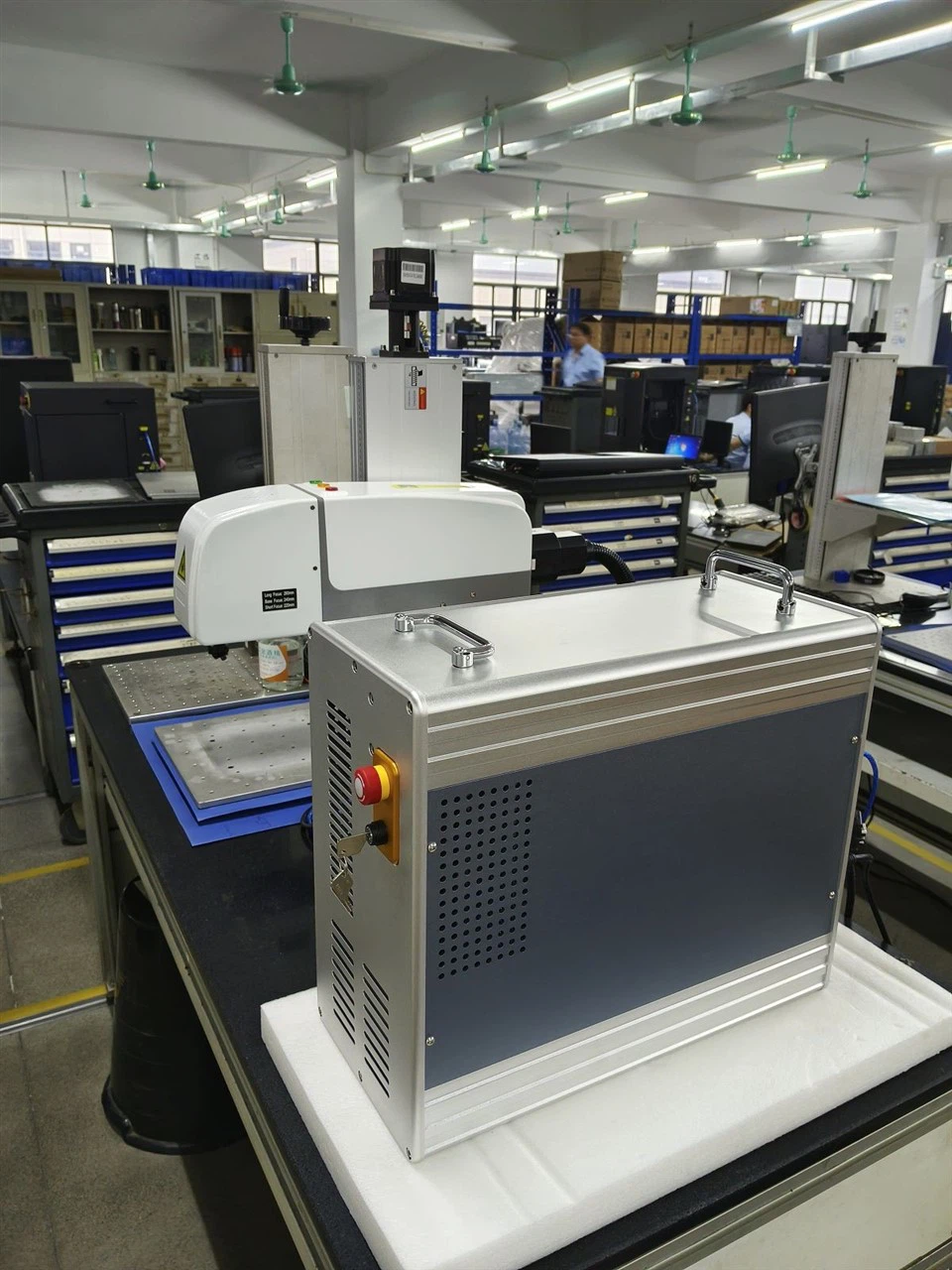

So, how does a fiber laser desktop perform in these areas? Well, fiber lasers are known for their high - energy density and precision. When a fiber laser desktop cuts through metal, it focuses a highly concentrated beam of light onto a very small area. This concentrated energy vaporizes or melts the metal quickly and cleanly. Because of this, the edges tend to be very smooth. The high - energy beam can cut through the metal in a way that minimizes the formation of burrs. Burrs are those little bits of metal that stick out from the edge after a cut. They can be a real pain to deal with, as they often require additional finishing processes to remove. But with a fiber laser desktop, the chances of getting large burrs are significantly reduced.
In terms of perpendicularity, fiber laser desktops also do a great job. The beam of the fiber laser can be controlled very precisely. Modern fiber laser desktops come with advanced control systems that can adjust the beam's path and intensity. This allows for very accurate cuts, ensuring that the edges are as close to perpendicular as possible. Of course, there are some factors that can affect this, like the type of metal being cut and its thickness.
Let's talk about different types of metals. When cutting mild steel, a fiber laser desktop can produce excellent edge quality. Mild steel is relatively easy to cut, and the laser can create smooth, clean edges with minimal burrs. The high - energy beam can quickly penetrate the steel, and the cutting process is usually very efficient. Stainless steel is another common metal that fiber laser desktops are used to cut. Stainless steel has different properties compared to mild steel, such as its resistance to corrosion. But a fiber laser can still cut through it with good edge quality. However, because stainless steel is a bit more difficult to cut, the cutting speed might be a bit slower, and the operator may need to adjust the laser settings slightly.
Aluminum is a bit of a different story. Aluminum is a highly reflective metal, which means it can be challenging for the laser to penetrate. But with the right settings and a high - power fiber laser desktop, it's still possible to achieve good edge quality. The key is to find the right balance between the laser power, the cutting speed, and the assist gas. Assist gas is used to blow away the molten metal during the cutting process, and it can have a big impact on the edge quality. For aluminum, using nitrogen as an assist gas can help to create a cleaner cut and reduce the formation of dross (the waste material that forms during the cutting process).
Now, let's take a look at some of the products we offer. We have the Compact 3D Fiber Laser Marking Machine. This machine is not only great for marking, but it can also perform some cutting tasks with high precision. Its 3D capabilities allow for more complex cuts and markings, which can be really useful for creating unique metal parts.
Our 3D Desktop Fiber Laser Marking Machine is another great option. It's compact and easy to use, making it suitable for small - scale workshops or even home - based businesses. Despite its small size, it can still deliver excellent edge quality when cutting metals.
If you need more power, our 100w Fiber Laser Marking Machine is the way to go. With 100 watts of power, it can cut through thicker metals with ease and still maintain good edge quality.
When it comes to the thickness of the metal, thinner metals are generally easier to cut with a fiber laser desktop. For example, cutting a sheet of 1 - mm thick metal will usually result in a very clean and smooth edge. As the thickness increases, say to 5 mm or more, the cutting process becomes a bit more challenging. The laser may need to take more time to penetrate the metal, and the operator may need to adjust the settings to ensure good edge quality. But overall, fiber laser desktops are capable of cutting through a wide range of metal thicknesses.
In conclusion, the edge quality of a fiber laser desktop when cutting metals is generally very good. Thanks to the high - energy density and precision of the fiber laser, it can create smooth, clean edges with minimal burrs and good perpendicularity. However, achieving the best edge quality requires careful consideration of factors such as the type of metal, its thickness, and the laser settings.
If you're in the market for a fiber laser desktop for your metal - cutting needs, we'd love to talk to you. Whether you're a small - business owner looking to add some metal - cutting capabilities or a large - scale manufacturer in need of a reliable cutting solution, we have the products and expertise to help you. Get in touch with us, and let's start a conversation about how we can meet your specific requirements.
References
- "Laser Cutting Technology: Principles and Applications" by John Doe
- "Metal Cutting with Fiber Lasers: A Comprehensive Guide" by Jane Smith