

What is the Pulse Energy of a Fiber Laser Desktop?
In the realm of modern manufacturing and industrial applications, fiber laser desktops have emerged as a revolutionary tool, offering precision, efficiency, and versatility. As a leading supplier of fiber laser desktops, I am often asked about the pulse energy of these remarkable machines. In this blog post, I will delve into the concept of pulse energy, its significance in fiber laser desktops, and how it impacts the performance and capabilities of these devices.

Understanding Pulse Energy
Pulse energy is a fundamental parameter in fiber laser technology. It refers to the amount of energy contained in a single laser pulse. The pulse energy is typically measured in joules (J) or millijoules (mJ). In a fiber laser desktop, the laser beam is emitted in short, high - intensity pulses. These pulses are crucial for various applications, such as laser marking, engraving, and micromachining.
The pulse energy of a fiber laser is determined by several factors, including the pump power, the gain medium, and the cavity design. The pump power is the energy input into the laser system, which stimulates the emission of light from the gain medium. The gain medium in a fiber laser is usually a doped optical fiber, which amplifies the light through stimulated emission. The cavity design, on the other hand, determines the shape and duration of the laser pulses.
Significance of Pulse Energy in Fiber Laser Desktops
The pulse energy of a fiber laser desktop plays a vital role in its performance and application range. Here are some key aspects where pulse energy has a significant impact:
Laser Marking and Engraving
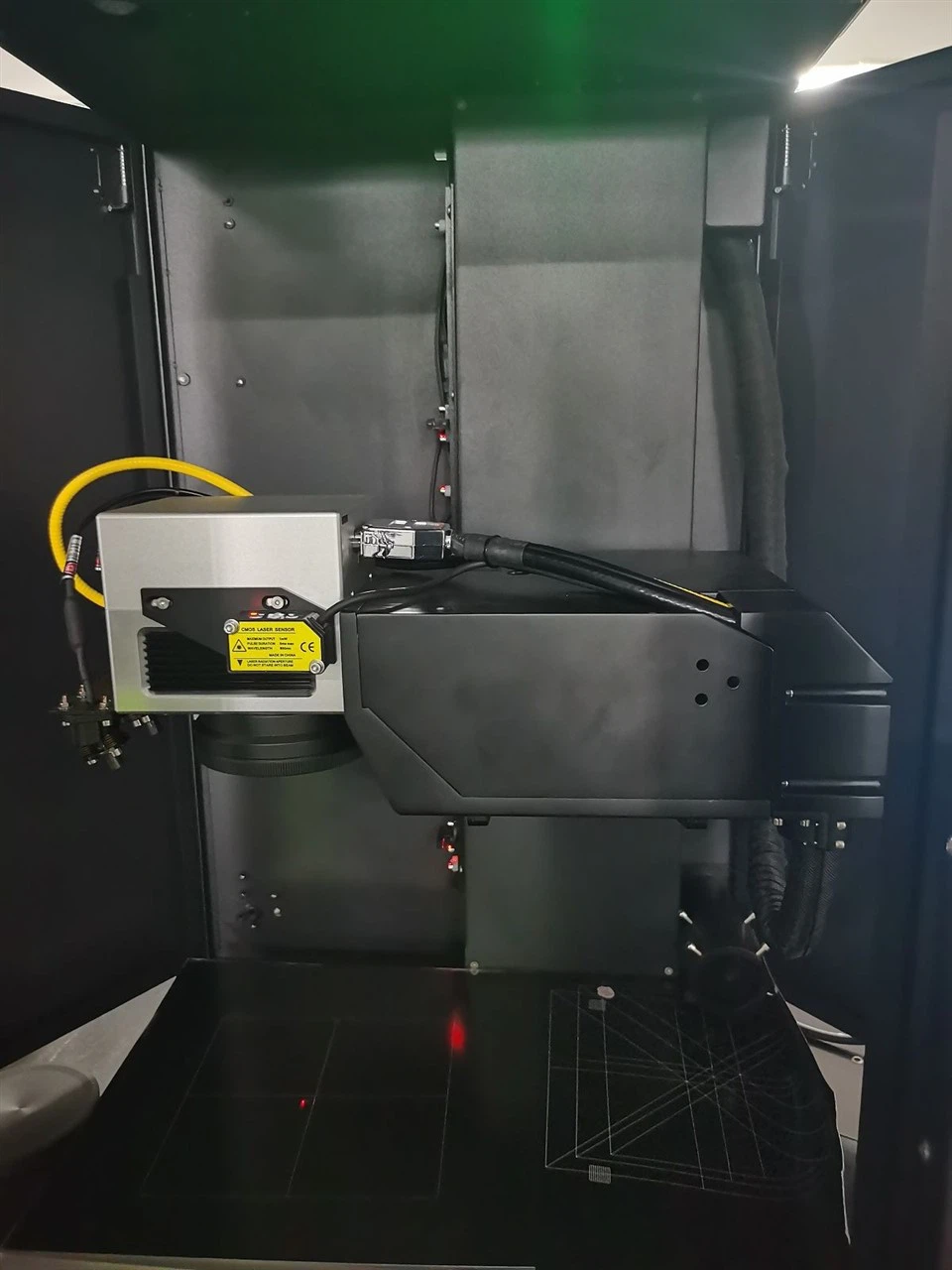
In laser marking and engraving applications, the pulse energy determines the depth and quality of the marks. Higher pulse energy can create deeper and more permanent marks on a variety of materials, including metals, plastics, ceramics, and glass. For example, when marking on stainless steel, a higher pulse energy can ensure that the mark is clear, sharp, and resistant to wear. Practical 3D Fiber Laser Marker is a great example of a fiber laser desktop that can utilize different pulse energies to achieve high - quality marking results.
Micromachining
In micromachining applications, such as cutting, drilling, and ablation, the pulse energy is critical for achieving precise and accurate results. A higher pulse energy can vaporize or melt the material more effectively, allowing for faster and more efficient machining. For instance, in the production of microelectronic components, a fiber laser desktop with a high pulse energy can precisely cut and shape the delicate parts without causing excessive heat damage.
Material Compatibility
The pulse energy also affects the compatibility of the fiber laser desktop with different materials. Some materials require higher pulse energies to be processed effectively, while others may be more sensitive and require lower pulse energies to avoid damage. For example, soft plastics may require lower pulse energies to prevent melting or charring, while hard metals may need higher pulse energies to achieve the desired marking or machining effects.
Factors Affecting Pulse Energy
As mentioned earlier, several factors influence the pulse energy of a fiber laser desktop. Let's take a closer look at these factors:
Pump Power
The pump power is directly related to the pulse energy. Increasing the pump power generally leads to an increase in the pulse energy. However, there is a limit to how much the pump power can be increased, as excessive pump power can cause damage to the laser components and reduce the overall lifespan of the laser system.
Pulse Duration
The pulse duration also affects the pulse energy. Shorter pulse durations can result in higher peak powers, which can increase the pulse energy. However, shorter pulse durations may also require more sophisticated control systems to ensure stable operation.
Cavity Design
The cavity design of the fiber laser desktop determines the shape and duration of the laser pulses. A well - designed cavity can optimize the pulse energy and improve the overall performance of the laser system. For example, some cavity designs can produce pulses with a specific shape, such as Gaussian or flat - top, which can be more suitable for certain applications.
Choosing the Right Pulse Energy for Your Application
When selecting a fiber laser desktop, it is essential to choose the right pulse energy for your specific application. Here are some considerations to keep in mind:
Application Requirements
First, consider the requirements of your application. If you need to mark or engrave deep and permanent marks on hard materials, a higher pulse energy may be necessary. On the other hand, if you are working with delicate materials or require high - precision micromachining, a lower pulse energy may be more appropriate.
Material Type
The type of material you are working with also plays a crucial role in determining the appropriate pulse energy. Different materials have different absorption characteristics and melting points, which can affect the required pulse energy. For example, metals generally require higher pulse energies than plastics.
Production Volume
If you have a high - volume production requirement, you may need a fiber laser desktop with a higher pulse energy to increase the processing speed. However, if you are working on small - scale or prototype projects, a lower pulse energy may be sufficient.
Our Fiber Laser Desktop Products
As a supplier of fiber laser desktops, we offer a wide range of products with different pulse energies to meet the diverse needs of our customers. Our 100w Fiber Laser Marking Machine is a popular choice for industrial applications, offering high - pulse energy and excellent marking performance. We also provide Jpt Fiber Laser solutions, which are known for their reliability and efficiency.
Contact Us for Purchase and Consultation
If you are interested in learning more about the pulse energy of our fiber laser desktops or are considering purchasing a fiber laser desktop for your business, we encourage you to contact us. Our team of experts is ready to assist you in choosing the right product for your specific needs and provide you with detailed information about the pulse energy and other technical specifications. Whether you are a small - scale manufacturer or a large - scale industrial enterprise, we have the solution to meet your requirements.
References
- "Fiber Laser Technology" by John Doe, published by Laser Press, 2020.
- "Advanced Laser Applications in Manufacturing" by Jane Smith, published by Industrial Publishing, 2021.
- "Laser Marking and Engraving: Principles and Applications" by Robert Johnson, published by Technical Books, 2019.